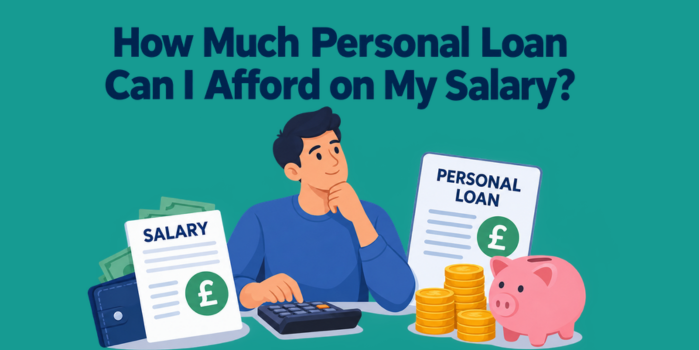
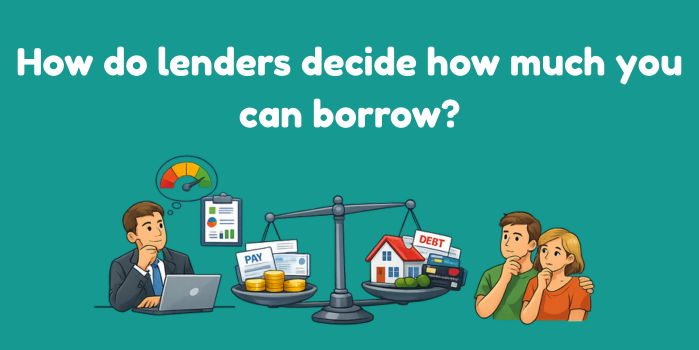
Whether you are taking out a mortgage, personal loan or car loan, borrowing starts from a big question: how much money my income will enable me to borrow? Undoubtedly, your credit score plays a paramount role in determining the loan amount, but the importance of having a stable income source cannot be downplayed.
Your current income sources demonstrate your repayment capacity, while your credit score reveals your past payment behaviour. Even if you are looking for a loan for people on benefits, you need some income to prove your affordability. During unemployment, your passive income sources will be regarded as your income. If you do not have any side gigs, unemployment benefits will serve the purpose of income.
At the time of deciding on your borrowing limit, lenders carefully examine several factors. The following questions help you know how lenders decide on the borrowing limit based on your income.
How do lenders decide how much you can borrow?
After you submit a loan application, a lender will run an affordability check. An affordability assessment includes:
- Your monthly income
- Current debt obligations
- Your credit score
- Types of loans you owe
Approval is made only if a lender is certain that your budget can fit in with other debt payments.
Does your income directly determine your loan amount?
While income is an important factor in deciding how much you can borrow, it is not the be-all and end-all. In addition to your earnings, a lender will also take into account:
- A debt-to-income ratio – if you owe too much debt against your income, you might not be able to manage another debt. A lender will refuse you a loan.
- A poor credit score – while subprime borrowers can secure a loan, they must not have an extremely poor credit rating. Too many late or missed payments will call your credibility into question.
Not to mention, there are also other factors that play a crucial role in deciding on the loan amount, but the above-mentioned factors are extremely important.
What types of income do lenders usually accept?
Lenders accept various types of income sources:
- Salaries/wages
- Self-employed income
- Rental income
- Government grants benefits
- Pension
If you have multiple sources of income, you can combine them to prove your affordability. Note that you will be on benefits only when you have lost your job or you are on low wages. They are regarded as your income only when you need money to meet small emergency expenses. Irregular income does not count, though.
How much could you borrow on a low income?
Of course, if you are on a low income, you will not be able to borrow a large amount of money. Despite a good credit score, lenders may cap a loan size in order to ensure affordability.
Ideally, a lender will not let you borrow more than 30% to 40% of your income at a time. If you already owe some debt, the combined debt should not account for more than 40% of your income.
However, it is not guaranteed because sometimes high interest rates, especially in the case of small emergency loans, elevate the total cost of the debt.
Can you borrow more if you have additional sources of income?
Yes, there is a possibility that you can borrow more money in case you have an additional debt, but the approval decision is made based on your affordability.
Sometimes, despite multiple income sources, you end up struggling with borrowing money as you already have too much outstanding debt.
So, it does not matter whether you have only one income source or many; you should focus on affordability.
How does your credit score impact your borrowing power?
A strong credit score can impact your borrowing power in several ways:
- It enables you to borrow a larger sum of money.
- It helps you qualify for lower interest rates.
- It helps increase your chances of approval.
If your credit score is subpar, you will struggle with borrowing a generous sum and qualifying for lower interest rates.
Can existing debt reduce the amount you can borrow?
Undoubtedly. If you have existing debts, your loan amount will be reduced. Lenders will factor into how much debt you already have to ensure your budget has wiggle room to manage payments of a new debt. A high debt-to-income ratio or credit utilisation ratio will raise doubts about your affordability.
What should you consider before borrowing the maximum amount available?
A golden rule of thumb says that you should never borrow a penny more than you need. Even though you think you can manage payments, you should adhere to your needs. Do not forget that loans cost interest.
Before borrowing money, you should consider:
- Future expenses (are you sure that you will continue to keep up with payments despite the changes in your financial circumstances)
- APRs (they decide the total cost of the debt. Are you sure you will not fall behind on payments?)
- Your comfort level with monthly payments (ensure that you will not struggle to meet other essential expenses along with debt payments)
Can you increase your chances of borrowing more?
Yes, you can ameliorate your chances of borrowing more money through the following methods.
- Try to improve your credit score by paying off all debts on time, reducing the loan amount you owe and credit card balances, and disputing errors on your credit report.
- If you have multiple debts, you should pay them off using a debt consolidation loan.
- Try to demonstrate that you have stable employment.
- Increase your income sources by getting a side gig.
The bottom line
How much you will be able to borrow based on your income depends on your affordability. income is just one factor that lenders take into account. Other factors include a credit mix, credit score, and recent credit inquiries. Borrow what you can repay with ease.
FAQs
Do lenders consider household income or individual income?
Lenders generally assess individual income. Household income is taken into account only when you are applying for a joint loan or when someone in your family is acting as a guarantor.
Can benefit income be included in a loan application?
Yes, benefits can be regarded as your income, provided they are regular. Not all types of benefits are treated like income, such as a jobseeker’s allowance.
Will a higher salary guarantee a larger loan?
A higher salary can improve your chances of being approved, but it cannot guarantee. No lender will sign off on your application unless you meet the affordability criteria.
Can freelance income be included?
Only if you have been receiving a stipend regularly can freelance income be included. You will need a bank statement to prove consistency.
What if income changes during loan repayments?
If repayments are becoming difficult, talk to your lender. They might not revise your repayment structure, but they can pause payments for some time or allow you to make minimum payments until your financial condition recuperates.